

Introduction: The Bacterial Adversary in Potato Production
Potato brown rot, also known as bacterial wilt, is one of the most destructive diseases of potato worldwide, caused by the Ralstonia solanacearum species complex (RSSC), a Gram negative, soil borne bacterium. The pathogen causes severe yield and quality losses in potatoes (Solanum tuberosum) and other solanaceous crops such as tomato, pepper and eggplant. Infection results in rapid vascular wilting, plant collapse and tuber decay. Globally, the disease leads to billions of dollars in annual economic losses particularly in tropical and subtropical regions; however, certain strains, notably race 3 biovar 2 (R3bv2) are also capable of infecting crops in cooler temperate climates.
RSSC typically invades plants through natural openings or root wounds often exacerbated by nematode damage and colonizes the xylem vessels. The bacterium secretes exopolysaccharides (EPS) and type III effector proteins that block water transport causing wilting and eventual death of the plant. It thrives under warm, humid conditions (25–35 °C for most strains, 12–24 °C for R3bv2). Poor soil health, contaminated irrigation water and global seed or tuber movement accelerate its spread.
Effective management relies on integrated pest management (IPM) strategies combining resistant varieties, strict sanitation, crop rotation and use of pathogen free planting material. As climate change alters temperature and rainfall patterns the potential distribution of R. solanacearum is expanding posing an increasing threat to global potato production and food security.
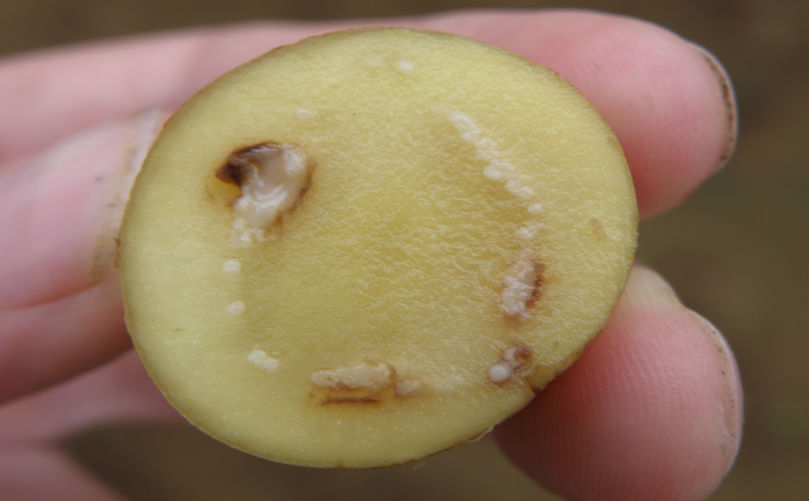
Tuber Infection Symptoms of Potato Brown Rot: Vascular Browning and Bacterial Exudate
History: Tracing the Bacterial Wilt Pathogen in Potatoes
Bacterial wilt was first isolated in 1896 by Erwin F. Smith from wilting tomato plants in the United States and was initially named Bacillus solanacearum. Its association with potatoes commonly referred to as “brown rot” was documented in Europe by 1914, where it caused severe outbreaks in potato fields, particularly in cooler climates. During the early 20th century, widespread occurrences across Africa and Asia further established it as a major pathogen of tropical and subtropical potatoes.
The bacterium was later reclassified as Pseudomonas solanacearum in the mid-1900s and subsequently transferred to the genus Ralstonia in 1995 based on molecular and phylogenetic analyses. By the 2000s, the Ralstonia solanacearumspecies complex (RSSC) was categorized into four phylotypes reflecting geographic origins: phylotype I (Asia), II (Americas), III (Africa) and IV (Indonesia–Australia). A major taxonomic revision in 2014 further divided the complex into three species: R. solanacearum (phylotype II), R. pseudosolanacearum (phylotypes I and III) and R. syzygii (phylotype IV).
Within phylotype IIB, sequevar 1 commonly known as Race 3 biovar 2 (R3bv2) emerged during the 1990s as a major concern following its introduction into North America and Europe through infected geranium stock. Due to its potential for long-term survival in temperate climates and bioterrorism concerns, R3bv2 was designated a U.S. Select Agent in 2002.
Recent genomic research (2024–2025) has provided deeper insights into RSSC evolution, revealing clonal expansions, novel exopolysaccharide (EPS) variants enhancing virulence and recombination events leading to hypervirulent lineages. For instance, 2025 studies in Mali identified genetically diverse RSSC strains in potato seed lots, while experiments involving biopriming with beneficial microbial consortia demonstrated enhanced host defense responses mediated by pathogenesis related proteins.
Global Distribution and Spread of Potato Brown Rot
Potato brown rot is widely distributed across tropical and subtropical regions including Africa, Asia, Latin America and certain parts of Europe and North America. Phylotype II of the Ralstonia solanacearum species complex (RSSC) predominates in the Americas and Europe, where it is strongly associated with potato infections. The Race 3 biovar 2 (R3bv2) strain a regulated quarantine pathogen has extended its range into temperate zones such as the United States, Canada and northern Europe, primarily through trade in contaminated geraniums and seed potatoes.
Major disease hotspots include the East African highlands (notably Kenya and Uganda), where yield losses can reach up to 75% as well as the Southeast Asian lowlands and Andean regions of South America. The bacterium spreads via infested soil, irrigation water, contaminated seed tubers, agricultural tools and international trade. Remarkably, it can persist in soil for over a decade or survive in a viable but non-culturable (VBNC) state under adverse conditions.
Climate change has further intensified its potential range and impact. Predictive models for 2025 indicate a northward expansion of potato brown rot into cooler regions of northern Europe and North America with an estimated 15–25% increase in disease incidence linked to warmer soils and erratic rainfall patterns. Recent outbreaks such as those detected in Malian seed stocks underscore the critical role of global trade in facilitating the dissemination of genetically diverse RSSC strains.
Host Range and Cross-Infection Dynamics
The Ralstonia solanacearum species complex (RSSC) exhibits an exceptionally broad host range infecting over 250 to 450 plant species across more than 54 botanical families making it one of the most versatile plant pathogens known. Potatoes (Solanum tuberosum) remain the primary and most susceptible host within the Solanaceae family along with other major crops such as tomato, eggplant, pepper, tobacco, peanut, banana, ginger and legumes like beans. Non-Solanaceae hosts include economically important ornamental plants such as geraniums (Pelargonium spp.), which have facilitated the global dissemination of certain strains particularly Race 3 biovar 2 (R3bv2) through the ornamental plant trade.
Weedy species including black nightshade (Solanum nigrum), pigweed (Amaranthus spp.), stinging nettle (Urtica dioica) and various wild Solanum species serve as asymptomatic reservoirs, harboring the pathogen without visible symptoms and sustaining it within ecosystems. These alternative hosts play a crucial role in cross infection dynamics by acting as transmission bridges to cultivated crops via shared soil, contaminated irrigation water or farm tools.
Cross infection patterns are highly strain specific. Phylotype IIB-1 (which includes R3bv2) primarily infects potatoes, causing severe brown rot, whereas phylotype IIB-4NPB targets plantains and other members of the Musaceae family. The pathogen’s capacity to infect across plant families is driven by ecological overlap and the use of shared resources, such as contaminated irrigation systems or infested soils, where the bacterium can persist for prolonged periods.
Genetic recombination and horizontal gene transfer among RSSC strains contribute to the emergence of new variants with expanded host ranges or heightened virulence. Recently identified genetically diverse RSSC strains in potato seeds, while transcriptomic analyses revealed adaptive effector proteins that enable broader host colonization. Nematodes particularly root knot species such as Meloidogyne incognita intensify cross infection by creating root entry points, increasing infection efficiency by up to 50% in co-infested systems.
In potato production, infection often begins in tubers during storage or planting spreading systemically through the vascular system to foliage and tuber progeny leading to field wide epidemics through the reuse of infected seed potatoes. Climate change, particularly rising temperatures, further accelerates cross host interactions by expanding suitable environments for RSSC survival and transmission, thereby heightening the risk of inter-crop infections in mixed farming systems.
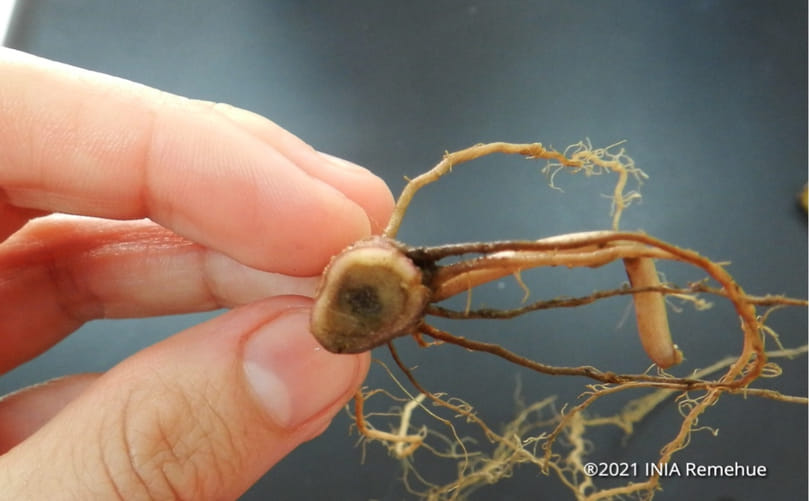
Systemic Vascular Colonization by Ralstonia solanacearum (Source: INIA Remehue)
Global Economic Burden and Quality Losses
Potato brown rot causes devastating economic losses worldwide, with annual damage to potato production estimated to exceed USD 1 billion, primarily resulting from yield reductions of 10–100% in affected fields. In high-risk regions such as East Africa (notably Kenya, Uganda and Ethiopia), losses can reach 30–75%, severely affecting smallholder farmers who depend on potatoes as both a staple food and a source of income. Comparable impacts are reported in Southeast Asia and the Andean regions of Latin America, where tropical lowlands often experience near total crop failure during severe epidemics. Across all host plants the broader Ralstonia solanacearum species complex (RSSC) contributes to global agricultural losses estimated at USD 19 billion annually, underscoring the major economic burden associated with potato brown rot.
Beyond yield loss, quality deterioration compounds the problem. Infected tubers exhibit internal browning, vascular ring decay, hollowing and bacterial ooze, rendering them unmarketable and unsuitable for processing into chips, fries or starch. These symptoms lead to cosmetic downgrades, shortened shelf life and post-harvest spoilage with rejection rates of 20–50% reported at local markets and export inspection points.
Additional economic strain arises from management measures such as the use of certified disease-free seed potatoes, which can increase production costs by 10–20% along with soil fumigation and long crop rotations that restrict land availability and reduce profitability. Quarantine enforcement for R3bv2 further exacerbates financial losses through trade restrictions as seen in European Union bans on seed imports from infested regions, disrupting supply chains and export revenues.
In developing nations, socioeconomic constraints intensify these challenges. Limited access to resistant varieties, diagnostics and proper disease management practices perpetuates yield instability and food insecurity among smallholder farmers. Climate change further magnifies the threat projections indicate an additional 15–25% increase in losses by 2030 due to the northward and altitudinal expansion of pathogen suitable zones. These mounting risks highlight the urgent need for investment in breeding programs, pathogen surveillance and sustainable management strategies to safeguard global potato production and market stability.
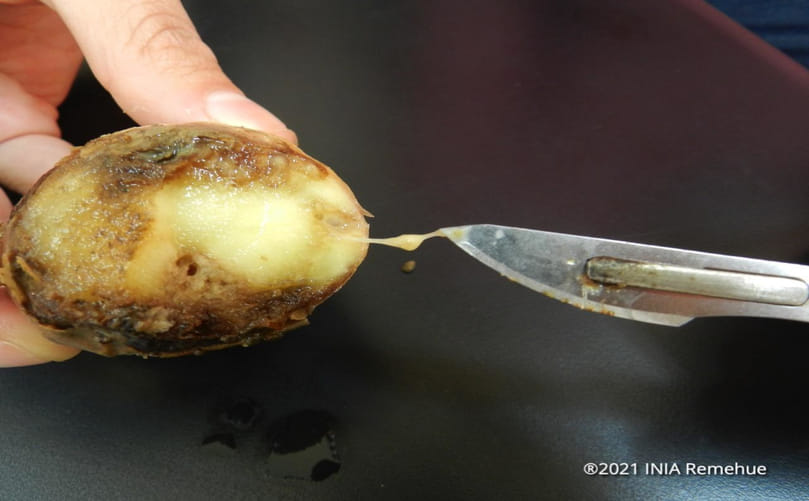
Characteristic Vascular Browning and Bacterial Ooze in Infected Potato Tubers (Source: INIA)
Biology, Life Cycle and Pathogenicity
The Ralstonia solanacearum species complex (RSSC) comprises aerobic, non-spore forming, Gram negative, motile rods measuring approximately 0.5–1.5 μm in length. Equipped with polar flagella, these bacteria exhibit chemotactic movement toward host root exudates in soil or water environments. As soil and waterborne pathogens, RSSC members persist in diverse ecological niches, surviving adverse conditions for decades by forming biofilms on surfaces or transitioning into a viable but non-culturable (VBNC) state.
The infection cycle begins with the bacterium’s survival in infested soil, plant residues or irrigation water, where populations can reach densities of up to 10⁸ CFU per gram. Upon detecting host root exudates, RSSC cells attach to root surfaces using pili and extracellular polysaccharides, subsequently invading through natural openings, wounds or nematode induced lesions. Once inside, they multiply within the cortex and progressively colonize the vascular system.
Pathogenesis is primarily driven by massive production of exopolysaccharides (EPS), which obstruct xylem vessels and impede water transport leading to wilting symptoms. Virulence is further mediated by multiple molecular mechanisms including the type III secretion system (T3SS), which injects effector proteins to suppress host immune responses; siderophore mediated iron acquisition and quorum sensing systems that coordinate gene expression during infection. In potato plants, infection typically originates in tubers and spreads systemically through the vascular network, with disease progression completing within days to weeks under favorable conditions. Infected tissues subsequently release bacterial cells into the surrounding soil or water perpetuating the disease cycle.
Recent genomic and transcriptomic analyses reveal stage specific gene expression patterns during infection. Genes associated with motility and chemotaxis are highly expressed during early colonization, whereas those responsible for EPS biosynthesis and virulence regulation peak during vascular invasion. This dynamic adaptation enables RSSC to overcome host defenses including pathogenesis-related (PR) proteins. Strain specific traits such as the cold tolerance of Race 3 biovar 2 (R3bv2) further enhance pathogenic fitness, facilitating infections in temperate and high-altitude potato growing regions.
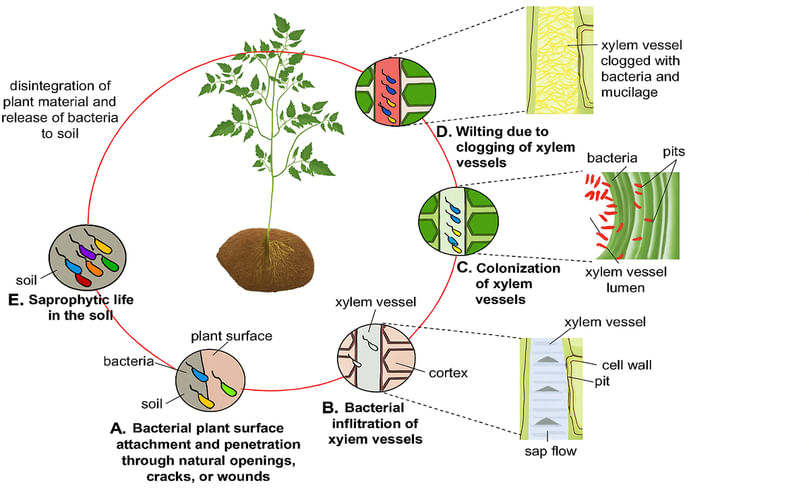
Different stages of the Ralstonia solanacearum life cycle include the saprophytic phase, where the bacterium survives on organic matter in the soil in the absence of a host and the pathogenic phase, where it infects and feeds on living host plants.
Factors Influencing the Severity of Potato Brown Rot
Disease severity in potato brown rot is determined by a complex interplay of environmental, biological and agronomic factors.
Soil properties play a pivotal role: sandy or poorly drained soils with pH values of 6–7 and low fertility such as acidic or nutrient deficient soils favor bacterial survival and root colonization, increasing disease incidence. Temperature strongly influences pathogen activity with most RSSC strains thriving between 24–35°C, whereas Race 3 biovar 2 (R3bv2) can cause severe outbreaks at cooler temperatures of 12–24°C, accounting for its prevalence in highland and temperate regions.
High soil moisture (>85%) and prolonged wet conditions from irrigation or rainfall accelerate disease progression as flooding promotes bacterial dissemination and induces root hypoxia, compromising plant defenses. Inoculum density thresholds above 10⁵ CFU per gram of soil trigger dose dependent epidemics with higher bacterial loads resulting in faster wilt onset and greater yield losses.
Biological interactions also amplify severity. Co-infections with root knot nematodes (Meloidogyne spp.) create entry points and can increase susceptibility by 2–3 fold.
Host genotype is critical: resistant cultivars such as 'Granola' display reduced disease severity due to stronger immune responses, whereas susceptible varieties experience rapid vascular disruption.
Agronomic practices further influence outcomes. Monocropping and high planting densities facilitate pathogen accumulation, whereas intercropping, crop rotations of 2–5 years with non-host species and cultivation at higher altitudes reduce disease incidence by diluting inoculum and improving airflow. Soil amendments, particularly calcium applications, can mitigate severity by enhancing plant defense mechanisms and inhibiting bacterial virulence, sometimes reducing wilt rates by up to 50%.
Strain specific virulence, driven by genetic diversity and adaptive traits such as novel exopolysaccharide (EPS) variants, escalates risk, especially in fields irrigated with contaminated water. Climate variability including erratic precipitation and temperature fluctuations, further exacerbates these factors, emphasizing the importance of integrated disease monitoring and management strategies.
Symptoms and Plant Damage Caused by Potato Brown Rot (Ralstonia solanacearum)
Potato brown rot, caused by Ralstonia solanacearum, exhibits a distinctive range of symptoms that can help differentiate it from other wilt diseases and indicates severe plant damage. Early symptoms include rapid wilting of lower leaves without initial yellowing, often starting asymmetrically on one side of the plant (epinasty) and progressing upward through the canopy. Leaves may temporarily wilt during the hottest part of the day and recover at night, but as the infection advances, wilting becomes permanent, accompanied by yellowing, browning and eventual necrosis.
Stem tissues display internal vascular browning and cutting a stem and placing it in water reveals a characteristic milky bacterial ooze a simple field diagnostic test that distinguishes brown rot from fungal wilts like Fusarium or Verticillium, which lack this exudate and typically progress more slowly from the base upward.
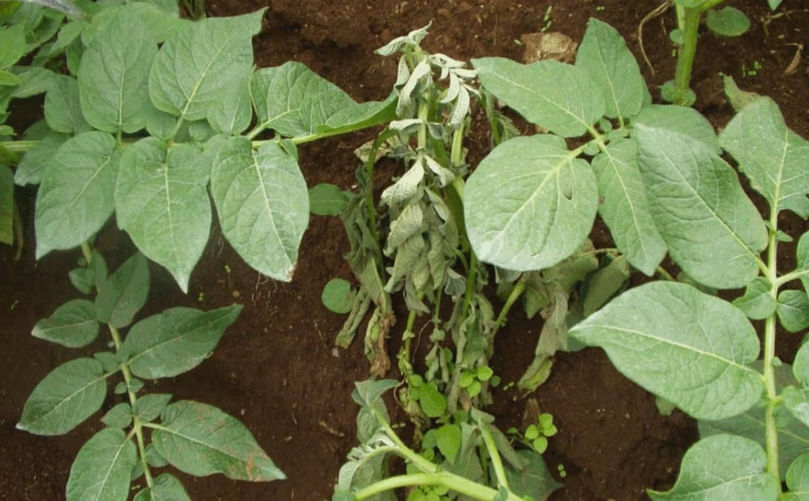
Ralstonia solanacearum infection in potato plants leads to the destruction of the vascular system, ultimately causing severe wilt symptoms. (Credit: Amilcar Sanchez)
Tubers show brown discoloration of the vascular ring, bacterial ooze from the eyes and heel (stolon) end and hollowing as decay progresses, often with soil adhering to oozing areas. Latent infections, particularly under cooler conditions can delay visible symptoms until harvest or storage, resulting in post-harvest rot. Overall plant damage includes stunted growth, wilting, collapse and unmarketable tubers unsuitable for consumption or processing due to internal decay and compromised quality. Co-infections with nematodes such as Meloidogyne incognita exacerbate symptoms by creating root entry points, increasing disease severity. Unlike some bacterial pathogens, Ralstonia solanacearum typically does not produce leaf spots making vascular and stem symptoms key indicators of infection.
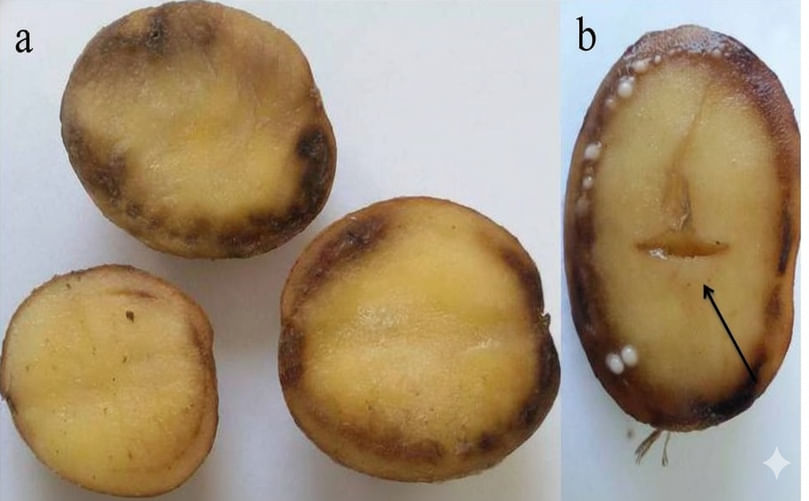
Ralstonia solanacearum infection in potato tubers is characterized by (a) brown discoloration of the vascular ring and (b) the presence of bacterial exudate oozing from the infected vascular tissues.
Integrated Management Strategies for Potato Brown Rot (Ralstonia solanacearum)
Management of potato brown rot requires an integrated pest management (IPM) approach as Ralstonia solanacearum persists in soil for extended periods making complete eradication difficult. Effective management combines cultural, chemical, biological, genetic and technological strategies to reduce pathogen load prevent spread and mitigate yield losses.
Cultural Practices: Cultural methods form the foundation of disease management. Crop rotation with non-host species such as corn, wheat, sorghum or legumes for 2–5 years reduces soil inoculum. Soil solarization achieved by covering moist soil with transparent plastic for 4–6 weeks during hot seasons and bio-fumigation with brassica crops suppress bacterial populations. Proper drainage to avoid waterlogging, high-altitude cultivation in cooler regions and maintaining soil pH around 6–7 improve plant resilience.
Chemical Control: Foliar applications of copper-based bactericides and soil fumigants like chloropicrin can reduce bacterial loads though efficacy varies with environmental conditions, application timing and strain. Compliance with organic or regulatory standards must be ensured and chemical control alone is insufficient for long-term management.
Biological Control: Biological approaches show considerable promise. Antagonistic microbes including Pseudomonas fluorescens, Bacillus subtilis and Streptomyces spp., suppress pathogen populations through competition and antibiosis. Bacteriophages specific to RSSC can directly reduce bacterial loads. Seed biopriming with microbial consortia induces systemic resistance mediated by pathogenesis related proteins, enhancing host defense against infection. Recent research highlights the potential of nanoparticles, such as iron oxide, silver and glycyrrhizic acid for antimicrobial activity though field scale validation is ongoing.
Host Resistance: Deployment of resistant or tolerant potato varieties, such as 'Red Pearl' and 'Granola' and grafted rootstocks like 'Hawaii 7996', provides moderate protection. Advances in biotechnology including EFR gene transfer and CRISPR-based approaches are being explored to enhance resistance to multiple RSSC strains.
Organic and Agronomic Enhancements: Organic amendments including lime, compost and stable bleaching powder can modify soil pH, improve microbial balance and reduce bacterial virulence. Intercropping with maize or Phaseolus vulgaris dilutes pathogen inoculum and improves airflow, reducing disease incidence. Proper sanitation including disinfection of tools, machinery and irrigation equipment is critical to prevent mechanical transmission.
Monitoring and Early Detection: Integration of IPM with early detection technologies such as PCR-based diagnostics, lateral flow devices and AI-driven monitoring platforms enables rapid identification of infections and targeted interventions. Quarantine enforcement, particularly for high-risk strains like Race 3 biovar 2 (R3bv2), remains essential to prevent introduction into new regions.
Overall, sustainable management of potato brown rot depends on a multi-layered IPM strategy, combining preventive, cultural, biological, chemical and technological measures with host resistance and regulatory compliance to reduce economic losses and safeguard potato production.
Prevention and Good Agricultural Practices for Potato Brown Rot
Prevention of potato brown rot centers on excluding Ralstonia solanacearum from fields as eradication is extremely difficult once the pathogen is established. The foundation of preventive measures is the use of certified, pathogen free seed potatoes. Cutting or injuring tubers should be avoided, as mechanical damage can increase disease incidence by up to 250%. Tools, knives, machinery and containers should be routinely disinfected with chlorine solutions, quaternary ammonium compounds or other effective sanitizers to minimize mechanical transmission.
Management of nematodes and weeds is critical as these organisms can act as reservoirs for the pathogen. For example, Solanum weeds, nightshades and certain broadleaf species should be removed from and around potato fields. Irrigation water must be monitored and if necessary, treated with chlorine or other approved sanitizers to prevent bacterial contamination. Field scouting should be conducted regularly and infected or symptomatic plants must be promptly removed (rogued) to prevent pathogen spread.
Quarantine and regulatory measures are particularly important for high-risk strains such as Race 3 biovar 2 (R3bv2). Infested fields may be subject to mandatory 5-year quarantine restrictions and strict adherence to select agent protocols is required to prevent international and domestic dissemination. Storage management is also essential: tubers should be kept at temperatures below 50°F (10°C) and hot water or hot air treatments such as 112°F (50°C) for 30 minutes can reduce surface and internal contamination.
Good agronomic practices further reduce disease risk. Cultivating potatoes at higher altitudes or in cooler regions, ensuring proper field drainage to avoid waterlogging and maintaining soil pH around 6–7 support plant health and reduce bacterial proliferation. Crop rotation with non-host species, intercropping with maize or legumes and the use of raised beds can dilute inoculum levels and improve airflow. Early detection kits based on PCR, ELISA or lateral flow devices allow for rapid confirmation of infection before visible symptoms appear. Integration of these practices with community awareness, sanitation measures and compliance with international trade regulations provides a robust framework to prevent potato brown rot outbreaks and safeguard both yield and quality.
Future Threats of Potato Brown Rot to Global Potato Production
Climate change represents a major emerging threat to potato production by expanding the geographic range and increasing the incidence of Ralstonia solanacearum infections. Predictive models indicate a northward expansion of the pathogen into temperate zones such as northern Europe and North America with projected yield losses increasing by 15–25% by 2030 due to warmer soils, extended periods of soil moisture and erratic rainfall patterns. In highland regions including the Andean mountains, rising temperatures may enable the pathogen to colonize previously unsuitable altitudes, increasing the risk of outbreaks in new potato growing areas.
Genetic recombination and horizontal gene transfer within the Ralstonia solanacearum species complex may generate hypervirulent strains with enhanced host range, environmental resilience or resistance to chemical and biological controls. Global trade, particularly in seed potatoes, ornamental plants and irrigation water, accelerates the spread of these strains to previously uninfected regions. Additionally, intensive agricultural practices that disrupt soil and rhizosphere microbiomes may compromise natural plant defenses, further increasing crop vulnerability.
To mitigate these future threats, advanced genomic surveillance is essential to detect emerging strains and track pathogen evolution. Breeding programs must prioritize the development of potato varieties with durable resistance including molecular approaches such as gene editing and marker-assisted selection. Integrated management strategies, combining biosecurity, resistant cultivars and climate adapted agronomic practices, will be crucial to sustaining potato production under changing environmental and epidemiological conditions.
Management Challenges in Controlling Potato Brown Rot
Controlling potato brown rot is particularly challenging due to the persistence and adaptability of Ralstonia solanacearum. The pathogen can survive in soil for decades, often in viable but non-culturable (VBNC) states making complete eradication virtually impossible. Latent infections in tubers or asymptomatic hosts evade detection complicating seed certification programs and quarantine enforcement.
Chemical management options are increasingly constrained by regulatory restrictions, such as EU bans on certain soil fumigants, while extended crop rotations are often impractical for smallholder farmers with limited land. The efficacy of biological control agents including Pseudomonas fluorescens, Bacillus subtilis, Streptomyces spp. and bacteriophages can vary with environmental condition and their effectiveness may decline under fluctuating temperatures or moisture regimes.
Socioeconomic barriers further hinder adoption of preventive measures in developing regions including the use of certified disease-free seeds, soil solarization and diagnostic tools. The select agent status of Race 3 biovar 2 (R3bv2) imposes additional regulatory challenges, necessitating coordinated surveillance, strict biosecurity and compliance with national and international protocols.
Emerging pathogen adaptations including resistance to nanoparticles and bacteriophages along with co-infections by root knot nematodes, exacerbate disease severity and complicate management strategies. These challenges underscore the need for integrated, multi-layered approaches combining host resistance, cultural practices, biosecurity and innovative technologies to sustainably manage potato brown rot.